2026-11-02
Field notes: the hangar that looked intact until the second pass
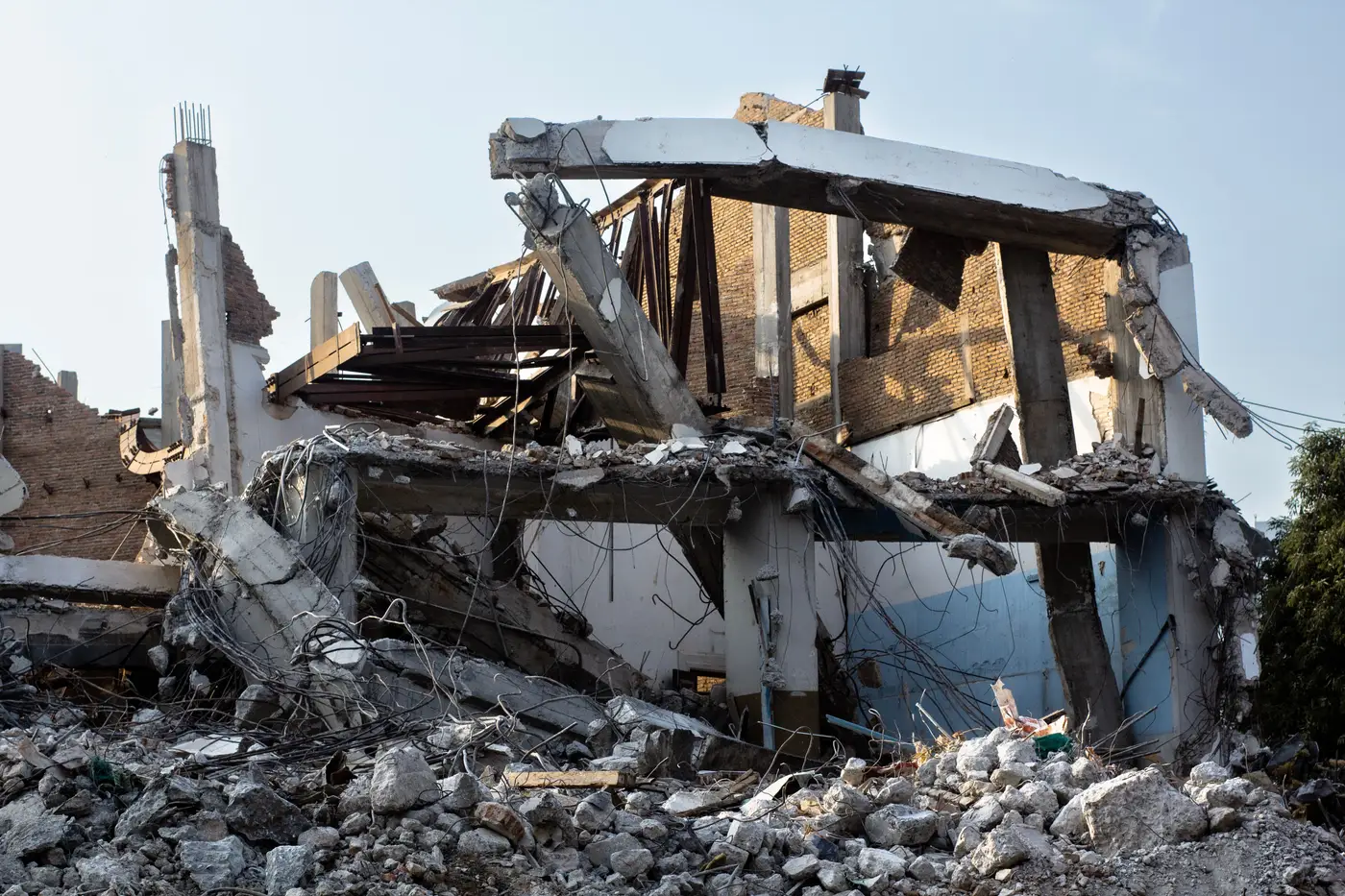
The first image comes back clean. Roofline unbroken, shadow pattern regular, no scorch halo spreading past the apron. Whoever is reading the pass marks the hangar "light damage, likely functional" and moves to the next target on the list. Then, a day or two later, a new collection shows the same building with its roof folded into the bay like a closed umbrella.
Nobody faked the first read. The roof genuinely was standing when the shutter opened.
Steel truss roofs don't fail the way concrete slabs do. A slab that takes overpressure either holds or it doesn't, and you can usually see the difference from above within the hour. A truss roof can absorb a shock that racks the connections, cracks a gusset plate, or snaps a diagonal member, and still sit there looking level for a surprisingly long time. The deck skin is doing the work of hiding the frame failure underneath it. Add a night of thermal cycling, a gust load, or the vibration from a secondary fire burning itself out inside the structure, and the thing that was "standing" quietly redistributes its load until it can't anymore.
This is the part of battle damage assessment that doesn't get talked about as much as the imagery resolution does. Plenty of the debate at the analyst desk is about ground sample distance, whether you can tell a holed roof from a shadow at half a meter versus a meter. Fair enough, that matters. But a roof that fails on a twelve-hour delay will beat a half-meter sensor every time, because the first pass is reading a building that hasn't finished failing yet.
I've seen the reverse read too, which is just as costly. A roof with a visible hole, written up as destroyed, that turns out to be covering equipment underneath that never took real damage. The shrapnel went through roofing material thin enough to look catastrophic from directly overhead and barely scratched the airframe parked under it. One pass, read in isolation, will get fooled either direction. A hole doesn't tell you what it hit, and an intact roof doesn't tell you the frame is sound.
What actually resolves this is timing, not sharper glass. You need the first pass to establish what happened at impact, and you need a second pass separated by enough hours for a compromised structure to either hold or come down on its own. The gap doesn't need to be exact. It needs to exist. A grading call made entirely on T+1 hour imagery is a snapshot of a structure mid-collapse, not a finished assessment of it, and treating it as finished is how a re-strike gets scrubbed against a hangar that's about to fold anyway, or how a target stays on tomorrow's list that structurally already died last night.
The practical habit this builds is simple. Hold the grade open past the first look. A quick pass with no visible change is one data point, logged with its timestamp, waiting on the next collection to earn a conclusion. A roofline that looks the same at T+2 as it did at T+0 supports a functional call. Flag it for the next collection window regardless, and let the second pass make the call.
That's the whole argument for building the assessment around the event and not around a fixed revisit schedule, comparing each dated pass against the one before it structure by structure rather than issuing a single grade and moving on. Battle Damage Assessment runs that way: a tasking fires when the strike happens, and the itemized grade for each building carries the date of the imagery it came from, so a hangar graded "functional" on Tuesday's pass and "collapsed" on Thursday's isn't a contradiction. It's the record doing its job.
Next time a roofline looks too clean right after a strike, give it a second pass before you believe it.