2026-11-16
Field notes: the courtyard wall that graded destroyed, the building behind it didn't
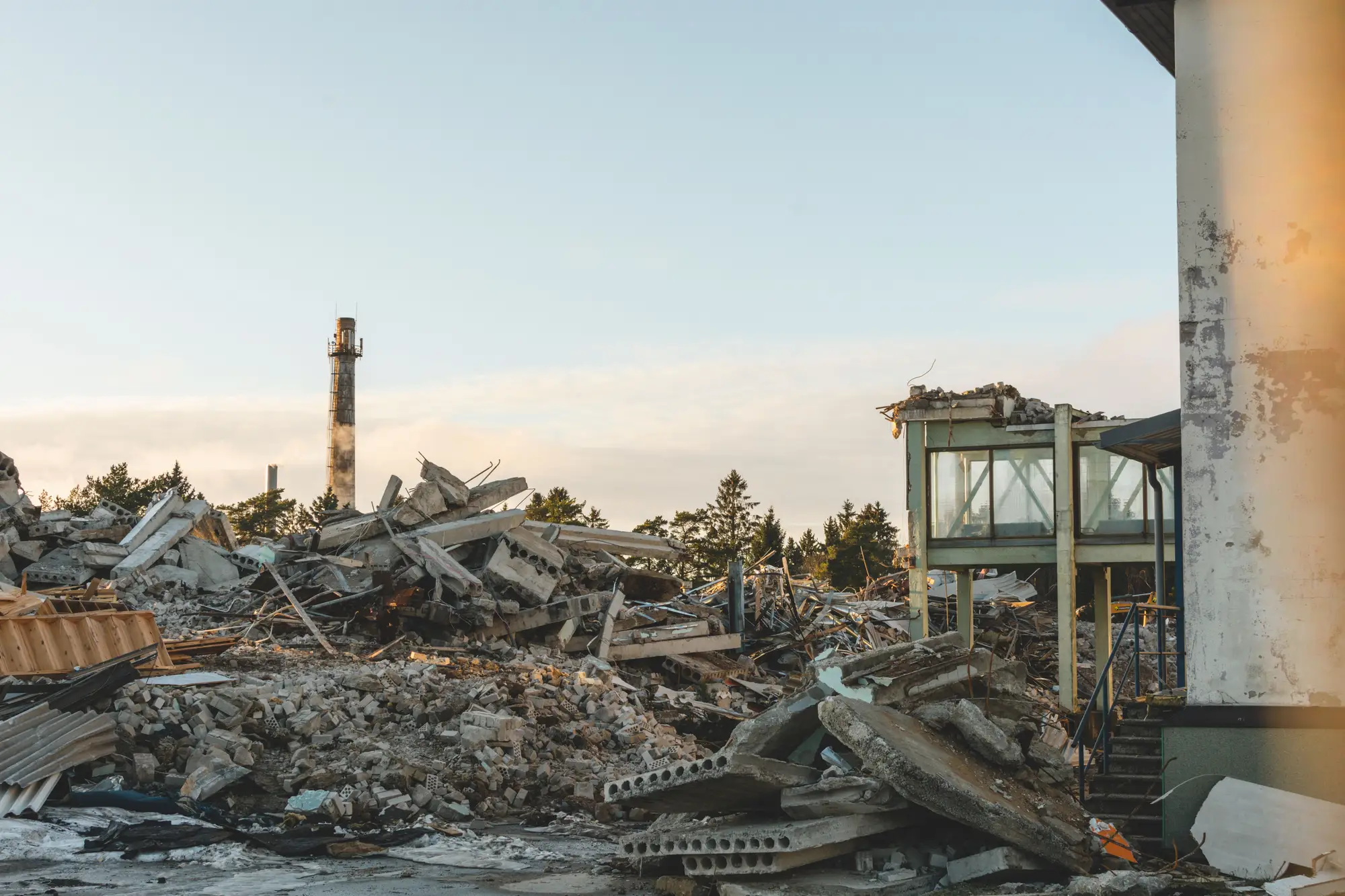
A compound strike from a few weeks back keeps coming up in conversation, not because the effect was unusual but because the imagery was a good teaching case. The DMPI was a two-story structure inside a walled courtyard. The post-strike pass came back clean enough: rubble where the wall used to be, a visible breach, debris scattered across the yard. Anyone glancing at the chip would call it a hit and move on.
Look at the building fifteen meters behind the breach and the roofline is intact. No spall pattern on the near face. The shadow geometry on the second story matches the pre-strike reference almost exactly. The wall took the energy. The building didn't.
This is the part of grading that doesn't show up in a training slide. A courtyard wall and the structure it surrounds are not one object for assessment purposes, even though they sit in the same compound and even though the strike was aimed at both in a loose sense. They're two separate entries on the damage log, graded independently, because the re-strike decision downstream depends on which one failed.
If you blend them into a single compound-level call, you get a grade that's true of the wall and false of the building, averaged into something that's accurate about neither. Call the compound "moderate damage" and a planner reading the log at the TOC has no way to know the target is still standing. Call it "destroyed" because the wall collapsed and you've closed out a DMPI that needs a second pass.
Grade the thing that was struck, separate from whatever sat near it. A perimeter wall absorbing blast is doing exactly what a perimeter wall does. It's not evidence of effect on the structure it was built to shield, sometimes it's the opposite. Wall failure can indicate the charge detonated short of the facade, or that blast overpressure vented outward before it reached load-bearing elements on the main structure. Either way, the wall's grade belongs to the wall.
This gets harder when the two objects share a pixel footprint in the before/after pair, which happens constantly with dense courtyard construction. The wall's rubble spreads into the yard and across the building's near wall in the after shot, so the eye wants to read the whole scene as one damage event. Per-structure grading only works if someone forces the separation before the scene reads as a single blob of debris. Separate what was tasked from what was adjacent, grade each on its own evidence, and the log stays honest even when the picture looks like one event.
The other habit this case reinforces: don't let the first pass be the only pass. The wall collapse is a strong visual signal and it's tempting to close the assessment there. But the DMPI was the building, and the building's grade needs its own look at roofline, facade, and any secondary indicators like scorch pattern or debris field directly on its own footprint, not borrowed from the wall next to it. A dated, itemized entry for the structure, separate from the wall's entry, is what lets a re-strike call get made on the target instead of on the more photogenic damage nearby.
None of this is exotic tradecraft. It's just discipline about what gets a grade and what doesn't, applied consistently enough that a compound with six structures in it produces six honest entries instead of one blended impression. If your current post-strike workflow is still producing compound-level calls instead of structure-level ones, that's usually the gap worth closing first, and Battle Damage Assessment is built around exactly that per-structure itemization.
Next time a courtyard strike comes back clean on the wall, check the roofline behind it before you call the DMPI done.